Sunday, May 27, 2012
A Special B-17 and Her Crew In 1943
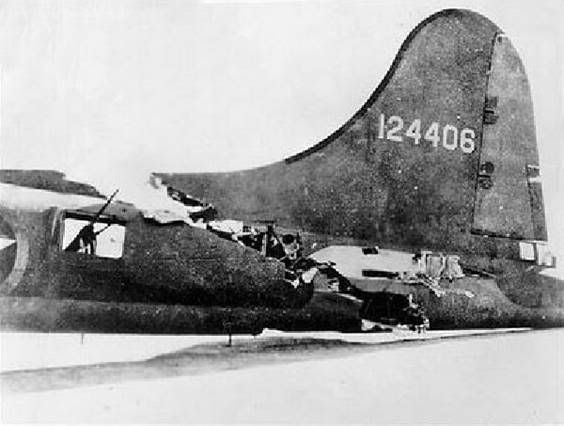
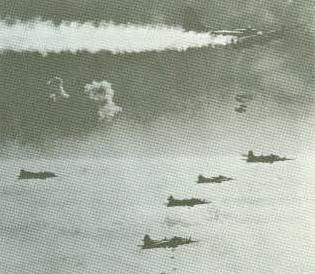
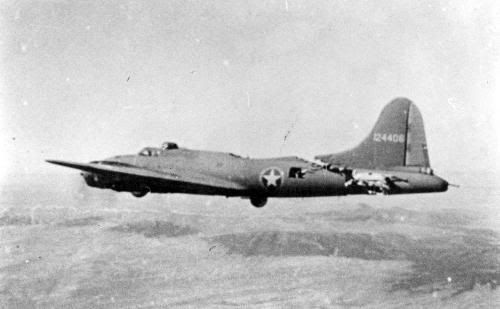
A mid-air collision on February 1, 1943, between a B-17 and a German fighter over the Tunis dock area, became the subject of one of the most famous photographs of World War II.
An enemy fighter attacking a 97th Bomb Group formation went out of control, probably with a wounded pilot then continued its crashing descent into the rear of the fuselage of a Fortress named All American, piloted by Lt. Kendrick R. Bragg, of the 414th Bomb Squadron.
When it struck, the fighter broke apart, but left some pieces in the B-17. The left horizontal stabilizer of the Fortress and left elevator were completely torn away. The two right engines were out and one on the left had a serious oil pump leak. The vertical fin and the rudder had been damaged, the fuselage had been cut almost completely through connected only at two small parts of the frame and the radios, electrical and oxygen systems were damaged. There was also a hole in the top that was over 16 feet long and 4 feet wide at its widest and the split in the fuselage went all the way to the top gunners turret.
Although the tail actually bounced and swayed in the wind and twisted when the plane turned and all the control cables were severed, except one single elevator cable still worked, and the aircraft still flew - miraculously! The tail gunner was trapped because there was no floor connecting the tail to the rest of the plane. The waist and tail gunners used parts of the German fighter and their own parachute harnesses in an attempt to keep the tail from ripping off and the two sides of the fuselage from splitting apart. While the crew was trying to keep the bomber from coming apart, the pilot continued on his bomb run and released his bombs over the target.
When the bomb bay doors were opened, the wind turbulence was so great that it blew one of the waist gunners into the broken tail section. It took several minutes and four crew members to pass him ropes from parachutes and haul him back into the forward part of the plane. When they tried to do the same for the tail gunner, the tail began flapping so hard that it began to break off. The weight of the gunner was adding some stability to the tail section, so he went back to his position.
The turn back toward England had to be very slow to keep the tail from twisting off. They actually covered almost 70 miles to make the turn home. The bomber was so badly damaged that it was losing altitude and speed and was soon alone in the sky. For a brief time, two more Me-109 German fighters attacked the All American. Despite the extensive damage, all of the machine gunners were able to respond to these attacks and soon drove off the fighters. The two waist gunners stood up with their heads sticking out through the hole in the top of the fuselage to aim and fire their machine guns. The tail gunner had to shoot in short bursts because the recoil was actually causing the plane to turn.
Allied P-51 fighters intercepted the All American as it crossed over the Channel and took one of the pictures shown. They also radioed to the base describing that the empennage was waving like a fish tail and that the plane would not make it and to send out boats to rescue the crew when they bailed out. The fighters stayed with the Fortress taking hand signals from Lt. Bragg and relaying them to the base. Lt. Bragg signaled that 5 parachutes and the spare had been "used" so five of the crew could not bail out. He made the decision that if they could not bail out safely, then he would stay with the plane and land it.
Two and a half hours after being hit, the aircraft made its final turn to line up with the runway while it was still over 40 miles away. It descended into an emergency landing and a normal roll-out on its landing gear.
When the ambulance pulled alongside, it was waved off because not a single member of the crew had been injured. No one could believe that the aircraft could still fly in such a condition. The Fortress sat placidly until the crew all exited through the door in the fuselage and the tail gunner had climbed down a ladder, at which time the entire rear section of the aircraft collapsed onto the ground. The rugged old bird had done its job.
Other B-17 Fuselage Hits from Dave's Warbirds,
Labels:
1943,
All American,
B-17,
Lt. Kendrick R. Bragg
Friday, January 6, 2012
"Reckless" A Marine Horse
"Reckless" was a pack horse during the Korean war, and she carried recoilless rifles, ammunition and supplies to Marines. Nothing too unusual about that, lots of animals got pressed into doing pack chores in many wars.
But this horse did something more….during the battle for a location called Outpost Vegas, this mare made 55 trips up and down the hill, on the way up she carried a total of over 9,000 lbs. of ammunition, and on the way down she carried wounded soldiers…
What was so amazing? Well she made every one of those trips through enemy fire and without anyone leading her.
And she was wounded twice. Here’s a video of her story and photos to prove where she was and what she did…. HERE
But this horse did something more….during the battle for a location called Outpost Vegas, this mare made 55 trips up and down the hill, on the way up she carried a total of over 9,000 lbs. of ammunition, and on the way down she carried wounded soldiers…
What was so amazing? Well she made every one of those trips through enemy fire and without anyone leading her.
And she was wounded twice. Here’s a video of her story and photos to prove where she was and what she did…. HERE
Labels:
ammunition,
Korean war,
Marines,
pack horse
Friday, November 11, 2011
Veteran's Day 2011 - Remembrance
February 23, 1945
The mountain? Suribachi
The island? Iwo Jima
The battle? WWII’s Battle of Iwo Jima
An American flag on a makeshift pole and six servicemen raising the flag of the United States of America

Of the six men pictured -
Michael Strank (26), Rene Gagnon (20), Ira Hayes (22), Franklin Sousley (20), John Bradley (22), and Harlon Block (21) - only three (Hayes, Gagnon, and Bradley) survived the battle.
Strank was killed six days after the flag raising when a shell, likely fired from an offshore American destroyer, tore his heart out. Block was killed by a mortar a few hours after Strank. Sousley, the last of the flag-raisers to succumb in the battle, was shot and killed by a sniper on March 21, a few days before the island was declared secure.
Following the war, plagued with depression brought on by survivor guilt, Hayes became an alcoholic. His tragic life was memorialized in the folk song "The Ballad of Ira Hayes", written by Peter LaFarge and recorded by Johnny Cash in 1964:
Then Ira started drinkin' hard
Jail was often his home
They'd let him raise the flag and lower it
Like you'd throw a dog a bone!
He died drunk early one mornin'
Alone in the land he fought to save
Two inches of water in a lonely ditch
Was a grave for Ira Hayes
Likewise Rene Gagnon's last years were bitter and alcoholic before his death in 1979 at the age of 54.
Following the war, John Bradley was staunchly tight-lipped about his experiences, often deflecting questions by claiming he had forgotten. During his 47-year marriage, he only talked about it with his wife Betty once and never again afterwards. Within the family, it was considered a taboo subject.
Following Bradley's death in 1994, his family went to Suribachi in 1997 and placed a plaque (made of Wisconsin granite and shaped like that state) on the spot where the flag raising took place. At the time of his death, Bradley's son, James Bradley knew almost nothing of his father's wartime experiences. As a catharsis, James Bradley spent four years interviewing the families of all the flag raisers, and published Flags of Our Fathers, a definitive book on the flag raising and its participants.
Flags of Our Fathers
The mountain? Suribachi
The island? Iwo Jima
The battle? WWII’s Battle of Iwo Jima
An American flag on a makeshift pole and six servicemen raising the flag of the United States of America
Of the six men pictured -
Michael Strank (26), Rene Gagnon (20), Ira Hayes (22), Franklin Sousley (20), John Bradley (22), and Harlon Block (21) - only three (Hayes, Gagnon, and Bradley) survived the battle.
Following the war, plagued with depression brought on by survivor guilt, Hayes became an alcoholic. His tragic life was memorialized in the folk song "The Ballad of Ira Hayes", written by Peter LaFarge and recorded by Johnny Cash in 1964:
Then Ira started drinkin' hard
Jail was often his home
They'd let him raise the flag and lower it
Like you'd throw a dog a bone!
He died drunk early one mornin'
Alone in the land he fought to save
Two inches of water in a lonely ditch
Was a grave for Ira Hayes
Likewise Rene Gagnon's last years were bitter and alcoholic before his death in 1979 at the age of 54.
Following the war, John Bradley was staunchly tight-lipped about his experiences, often deflecting questions by claiming he had forgotten. During his 47-year marriage, he only talked about it with his wife Betty once and never again afterwards. Within the family, it was considered a taboo subject.
Following Bradley's death in 1994, his family went to Suribachi in 1997 and placed a plaque (made of Wisconsin granite and shaped like that state) on the spot where the flag raising took place. At the time of his death, Bradley's son, James Bradley knew almost nothing of his father's wartime experiences. As a catharsis, James Bradley spent four years interviewing the families of all the flag raisers, and published Flags of Our Fathers, a definitive book on the flag raising and its participants.
Flags of Our Fathers
"On February 19, 1945, as part of their island-hopping strategy to defeat Japan, the United States invaded Iwo Jima. Iwo Jima was originally not a target, but the relatively quick fall of the Philippines left the Americans with a longer-than-expected lull prior to the planned invasion of Okinawa. Iwo Jima is located half-way between Japan and the Mariana Islands, where American long-range bombers were based, and was used by the Japanese as an early warning station, radioing warnings of incoming American bombers to the Japanese homeland. The Americans, after capturing the island, deprived the Japanese of their early warning system, and used it as an emergency landing strip for damaged bombers, saving many American lives.----------Wikipedia
Iwo Jima is a volcanic island, shaped like a trapezoid. Marines on the island described it as "a gray pork chop". The island was heavily fortified, and the invading United States Marines suffered high casualties. The island is dominated by Mount Suribachi, a 546-foot (166 m) dormant volcanic cone situated on the southern tip of the island. Politically, the island is part of the prefecture of Tokyo. It would be the first Japanese homeland soil to be captured by the Americans, and it was a matter of honor for the Japanese to prevent its capture.
Tactically, the top of Suribachi is one of the most important locations on the island. From that vantage point, the Japanese defenders were able to accurately spot artillery onto the Americans - particularly the landing beaches. The Japanese fought most of the battle from underground bunkers and pillboxes. It was common for Marines to knock out one pillbox using grenades or a flamethrower, only to have it begin shooting again a few minutes later after more Japanese infantry slipped into the pillbox using a tunnel. The American effort concentrated on isolating and capturing Suribachi first, a goal that was achieved on February 23, 1945, four days after the battle began. Despite capturing Suribachi, the battle continued to rage for many days, and the island would not be declared "secure" until 31 days later, on the 26th of March."
Labels:
flag raising,
Flags of our Fathers,
Iwo Jima,
Veteran's Day,
WWII
Wednesday, June 8, 2011
Final Disposition of Fugitives
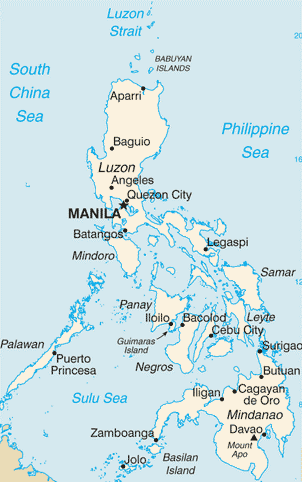
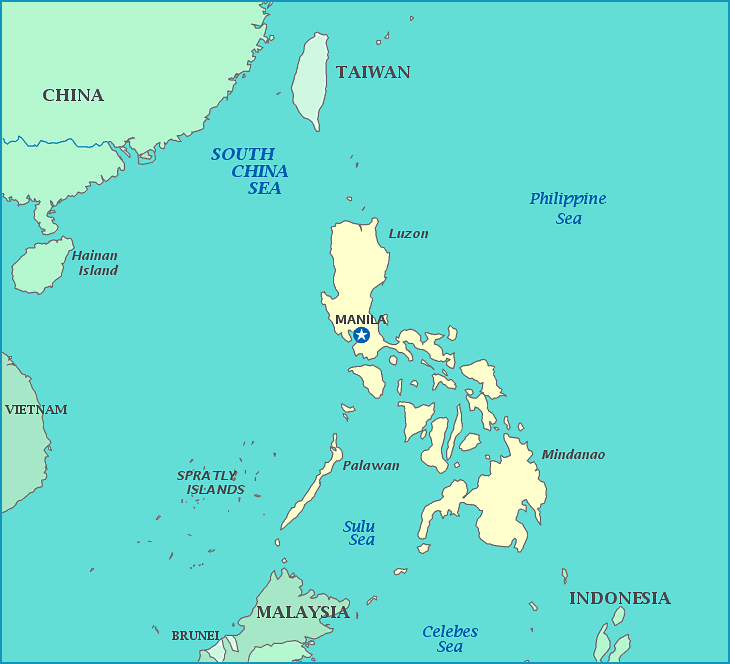
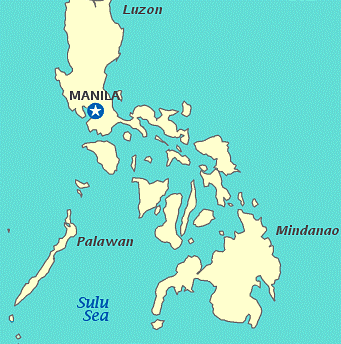
January 9, 1945, General Douglas MacArthur waded onto the shores of Luzon in one of the largest land invasions in the Pacific War. There are more than 7,000 nicked and wrinkled islands in the vast archipelago of the Philippines with Luzon the principal isle and Manila it's capital.
General Tomoyuki Yamashita commanded the Fourteenth Imperial Army and was waiting for MacArthur with a quarter of a million men.
The invasion at Lingayen Gulf was anticlamatic as Yamashita planned to wage a defensive war in the highland jungles in the north of Luzon. American troops waded ashore on the Lingayen beaches that were eerily empty.
With the Japanese refusing to join the battle at the coast, the Americans were left with two separate goals: pursue Yamashita north into the mountains and drive south for Manila. Winning Manila had to come first, but there was an obstacle.
American guerilla leader named Robert Lapham had spent the last three years living in the shadows, directing a band of Filipino insurgents in a protracted fight against the Japanese occupation. They had discovered 500 American soldiers in a squalid prison camp near the city of Cabanatuan.
These prisoners had been captured by the Japanese after the fall of Bataan and Corregidor. Many of them were survivors of teh Bataan Death March. For three years they had starved and slaved. Their fellow prisoners had died by the thousands because camp commandant refused to give them medication. At one time the Cabanatuan camp had been the largest POW compound in all of the Philippines, housing as many as 8,000 Americans. In recent months the Japanese had been sending able-bodied prisoners to work on ships and in the coal mines in Japan. Those left at Cabanatuan were the sickest and the weakest.
The guerrillas had been keeping a close eye on the camp and since the invasion of Lingayen Gulf, they'd become increasingly worried about the fate of the prisoners. The closer the Sixth Army drew to Cabanatuan the greater the chance the Japanese would massacre these prisoners.
They had every reason to worry. In August 1944, the War Ministry in Tokyo had issued a directive to the commandants of the various POW camps, outlining a policy for what it called the "final disposition' of prisoners. Bearing a chilling resemblance to actual events at Palawan, the directive stated:
When the battle situation becomes urgent the POWs will be concentrated and confined in their location and kept under heavy guard until preparations for the final disposition will be made. Although the basic aim is to act under superior orders, individual disposition maybe made in certain circumstances. Whether they are destroyed individually or in groups, and whether it is accomplished by means of mass bombing, poisonous smoke, poisons, drowning, or decapitation, dispose of them as the situation dictates. It is the aim not to allow the escape of a single one, to annihilate them all, and not to leave any traces.
Labels:
General Douglas MacArthur,
Luzon,
Manila,
Pacific War,
Philippines
Sunday, June 5, 2011
Massacre at Palawan
"If you break our rules,
we will kill you
or we will do something worse."
They did something worse.
Puerto Princesa Prison, Palawan Philippines
Within days of the December 7, 1941 attack on Pearl Harbor, the Empire of Japan bombed the Philippines (a Spanish possession for three hundred years until America defeated Spain in the Spanish-American War). These actions against the Philippines, and those that followed, led to disaster for thousands of American and Filipino forces stationed in the country.
The Americans captured in the Philippines were initially detained in filthy, overcrowded POW camps near Manila, but eventually most were shipped to other parts of the Japanese empire as slave laborers.
American prisoners remaining in the Philippines were 346 men who were sent 350 miles on August 1, 1942, from the Cabanatuan POW camps north of Manila, and from Bilibid Prison in Manila itself, to Puerto Princesa on the island of Palawan.
Palawan is on the western perimeter of the Sulu Sea, and the POWs were shipped there to build an airfield for their captors. Although the prisoners' numbers fluctuated throughout the war, the brutal treatment they received at the hands of their Japanese guards was always the same. The men were beaten with pick handles, and kickings and slappings were regular daily occurrences. Prisoners who attempted to escape were summarily executed.
At the Palawan compound food was minimal; each day, prisoners received a mess kit of wormy Cambodian rice and a canteen cup of soup made from camote vines boiled in water (camotes are a Philippine variant of sweet potatoes). Prisoners who could not work had their rations cut by 30 percent. If POWs were caught stealing food, they were whipped and beaten unconscious and revived to undergo further beatings. When American POWs were caught taking green papayas from a tree in the compound, their left arms were broken with an iron bar.
On September 1944, 159 of the American POWs at Palawan were returned to Manila. The remaining 150 men could complete the arduous labor on the airfield (1,530 yards long and 75 yards wide), hauling and crushing coral gravel by hand and pouring concrete seven days a week.
As American bombers and liberators sank ships and damaged planes at Palawan, POW morale in the camp soared. But the treatment by the Japanese grew worse and their rations were cut. The Japanese reluctantly allowed the Americans to paint American Prisoner of War Camp on the roof of their barracks. This gave the prisoners some measure of protection from American air attacks. The Japanese then stowed their own supplies under the POW barracks.
The constant presence of Allied aircraft overhead caused the prisoners to construct three shelters, each 150 feet long and 4 feet high, for their own protection during air raids. The Japanese had ordered that the entrances at each end of the shelters be only large enough to admit one man at a time. The shelters were roofed with logs and dirt and were located on the beach side of the camp.
On December 14, Japanese aircraft reported the presence of an American convoy, which they thought was destined for Palawan. All prisoner work details were recalled to the camp at noon. Two American Lockheed P-38 Lightning fighter aircraft were sighted, and the POWs were ordered into the air raid shelters. After a short time the prisoners re-emerged from their shelters, but Japanese 1st Lt. Yoshikazu Sato, whom the prisoners called the Buzzard, ordered them to stay in the area. A second alarm at 2 p.m. sent the prisoners back into the shelters, where they remained, closely guarded.
Suddenly, in an orchestrated and obviously planned move, 50 to 60 Japanese soldiers under Sato's leadership doused the wooden shelters with buckets of gasoline and set them afire with flaming torches, followed by hand grenades. The screams of the trapped and doomed prisoners mingled with the cheers of the Japanese soldiers and the laughter of their officer, Sato. As men engulfed in flames broke out of their fiery deathtraps, the Japanese guards machine gunned, bayoneted and clubbed them to death. Most of the Americans never made it out of the trenches and the compound before they were barbarously murdered, but several closed with their tormentors in hand-to-hand combat and succeeded in killing a few of the Japanese attackers.
A Marine survivor described escaping from his shelter as coming up a ladder into Hell. The four American officers in the camp had their own dugout, which the Japanese also doused with gasoline and torched. One officer, his clothes on fire, ran toward the Japanese and pleaded with them to use some sense but was machine-gunned to death.
About 30 to 40 Americans escaped from the massacre area, either through the double-woven, 61ΕΎ2-foot-high barbed-wire fence or under it, where some secret escape routes had been concealed for use in an emergency. They fell and/or jumped down the cliff above the beach area, seeking hiding places among the rocks and foliage. Several attempted to swim across Puerto Princesa's bay immediately, but were shot in the water. The continuing butchery could still be heard going on above. The Japanese were even using dynamite in forcing some of the men from their shelters. The stench of burning flesh was strong and the Japanese began moving in groups among the rocks dragging the Americans out and murdering them as they found them.
The slaughter continued until dark. Some of the wounded Americans were buried alive by the Japanese. Men who attempted to swim to safety across the bay were shot by soldiers on the shore or on a Japanese landing barge. A witness saw a party of five or six Japanese with an American who had been wounded, poking him along with bayonets that was drawing blood. Another Jap came up with some gasoline and a torch, and the American begged them to shoot him and not to burn him. The Japanese threw some gasoline on his foot and lit it, and the other Japanese laughed and poked him with their bayonets. Then they did the same thing to his other foot and to his hand. When the man collapsed, the Japanese then threw the whole bucket of gasoline over him, and he burst into flames.
When the Japanese ended their search for the surviving prisoners, there were still a few undiscovered Americans alive. Several prisoners hid in a sewer outlet. When the Japanese shone lights into the pipe, the POWs ducked under the water and were not discovered. After nightfall, they attempted to swim the bay, which was 5 miles across at that point. Of the 146 enlisted men and four officers held in the Palawan prison camp, only 11 men survived the massacre on December 14, 1944. Most of the survivors swam across the bay and were rescued by the inmates of Palawan's Iwahig Penal Colony, where several of the officials in charge were involved with the local resistance movement.
Filipino civilian prisoners at the colony, who were interned during the Japanese occupation of their homeland, fed and clothed the American POWs and contacted local guerrilla leaders on their behalf. The guerrillas escorted the Americans down the coast to Brooke's Point, where they were evacuated by a U.S. Navy seaplane to Leyte. There they told their story to U.S. military authorities.
Those who suffered at the hands of the Japanese government, like the POWs of Palawan, received some retribution at the War Crime Trials held in Manila and Tokyo after the end of World War II. Altogether, 5,000 Japanese were arrested for individual acts of brutality which had taken the lives of over a half million people from Asia and the United States. About 4,000 Japanese were brought to trial. Of the 4,000, 800 were acquitted, 2,400 were sentenced to three years or more in prison, and 809 were executed.
MAY THEY NEVER BE FORGOTTEN
Palawan Massacre Memorial
Commemorative Research Project - Pictorial Archive
Bataan Death March - The Great Raid
Labels:
Palawan,
Philippines
Monday, April 18, 2011
Ed W. "Too Tall" Freeman
(November 20, 1927 - August 20, 2008)
Ed Freeman was a United States Army helicopter pilot who received the U.S. military's highest decoration, the Medal of Honor, for his actions in the Battle of Ia Drang during the Vietnam War. During the battle, he flew through gunfire numerous times, bringing supplies to a trapped American battalion and flying dozens of wounded soldiers to safety. Freeman was a wing-man for Major Bruce Crandall who also received the Medal of Honor for the same missions.

In memory of Medal of Honor Recipient, Captain Ed Freeman, United States Air Force, who passed away at the age of 70 in Boise, Idaho.
May God Bless and Rest His Soul.
Ed Freeman's Medal of Honor citation reads as follows:
Captain Ed W. Freeman, United States Army, distinguished himself by numerous acts of conspicuous gallantry and extraordinary intrepidity on 14 November 1965 while serving with Company A, 229th Assault Helicopter Battalion, 1st Cavalry Division (Airmobile).
As a flight leader and second in command of a 16-helicopter lift unit, he supported a heavily engaged American infantry battalion at Landing Zone X-Ray in the Ia Drang Valley, Republic of Vietnam. The unit was almost out of ammunition after taking some of the heaviest casualties of the war, fighting off a relentless attack from a highly motivated, heavily armed enemy force. When the infantry commander closed the helicopter landing zone due to intense direct enemy fire, Captain Freeman risked his own life by flying his unarmed helicopter through a gauntlet of enemy fire time after time, delivering critically needed ammunition, water and medical supplies to the besieged battalion.
His flights had a direct impact on the battle's outcome by providing the engaged units with timely supplies of ammunition critical to their survival, without which they would almost surely have gone down, with much greater loss of life. After medical evacuation helicopters refused to fly into the area due to intense enemy fire, Captain Freeman flew 14 separate rescue missions, providing life-saving evacuation of an estimated 30 seriously wounded soldiers, some of whom would not have survived had he not acted. All flights were made into a small emergency landing zone within 100 to 200 meters of the defensive perimeter where heavily committed units were perilously holding off the attacking elements.
Captain Freeman's selfless acts of great valor, extraordinary perseverance and intrepidity were far above and beyond the call of duty or mission and set a superb example of leadership and courage for all of his peers. Captain Freeman's extraordinary heroism and devotion to duty are in keeping with the highest traditions of military service and reflect great credit upon himself, his unit and the United States Army.
Preserving the legacy Ed Freeman
(November 20, 1927 - August 20, 2008)
Ed Freeman was a United States Army helicopter pilot who received the U.S. military's highest decoration, the Medal of Honor, for his actions in the Battle of Ia Drang during the Vietnam War. During the battle, he flew through gunfire numerous times, bringing supplies to a trapped American battalion and flying dozens of wounded soldiers to safety. Freeman was a wing-man for Major Bruce Crandall who also received the Medal of Honor for the same missions.
You're a 19 year old kid.
You're critically wounded and dying in the jungle somewhere in the Central Highlands of Viet Nam.
It's November 11, 1967. Your unit is outnumbered 8-1 and the enemy fire is so intense from 100 yards away, that your CO (commanding officer) has ordered the MedEvac helicopters to stop coming in.
You're lying there, listening to the enemy machine guns and you know you're not getting out.
Your family is half way around the world, 12,000 miles away, and you'll never see them again.
As the world starts to fade in and out, you know this is the day.
Then - over the machine gun noise - you faintly hear that sound of a helicopter.
You look up to see a Huey coming in. But.. It doesn't seem real because no MedEvac markings are on it.
Captain Ed Freeman is coming in for you.
He's not MedEvac so it's not his job, but he heard the radio call and decided he's flying his Huey down into the machine gun fire anyway.
Even after the MedEvacs were ordered not to come. He's coming anyway.
And he drops it in and sits there in the machine gun fire, as they load 3 of you at a time on board.
Then he flies you up and out through the gunfire to the doctors and nurses and safety.
And, he kept coming back!! 13 more times!! Until all the wounded were out. No one knew until the mission was over that the Captain had been hit 4 times in the legs and left arm.
He took 29 of you and your buddies out that day. Some would not have made it without the Captain and his Huey.
In memory of Medal of Honor Recipient, Captain Ed Freeman, United States Air Force, who passed away at the age of 70 in Boise, Idaho.
May God Bless and Rest His Soul.
Ed Freeman's Medal of Honor citation reads as follows:
Captain Ed W. Freeman, United States Army, distinguished himself by numerous acts of conspicuous gallantry and extraordinary intrepidity on 14 November 1965 while serving with Company A, 229th Assault Helicopter Battalion, 1st Cavalry Division (Airmobile).
His flights had a direct impact on the battle's outcome by providing the engaged units with timely supplies of ammunition critical to their survival, without which they would almost surely have gone down, with much greater loss of life. After medical evacuation helicopters refused to fly into the area due to intense enemy fire, Captain Freeman flew 14 separate rescue missions, providing life-saving evacuation of an estimated 30 seriously wounded soldiers, some of whom would not have survived had he not acted. All flights were made into a small emergency landing zone within 100 to 200 meters of the defensive perimeter where heavily committed units were perilously holding off the attacking elements.
Captain Freeman's selfless acts of great valor, extraordinary perseverance and intrepidity were far above and beyond the call of duty or mission and set a superb example of leadership and courage for all of his peers. Captain Freeman's extraordinary heroism and devotion to duty are in keeping with the highest traditions of military service and reflect great credit upon himself, his unit and the United States Army.
Preserving the legacy Ed Freeman
Labels:
Battle of la Drang,
Ed Freeman,
Medal of Honor,
pilot,
Too Tall,
Vietnam,
WWII
Monday, December 6, 2010
Tuesday, November 23, 2010
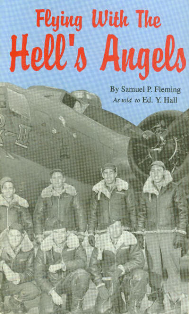
Flying With the Hell's Angels
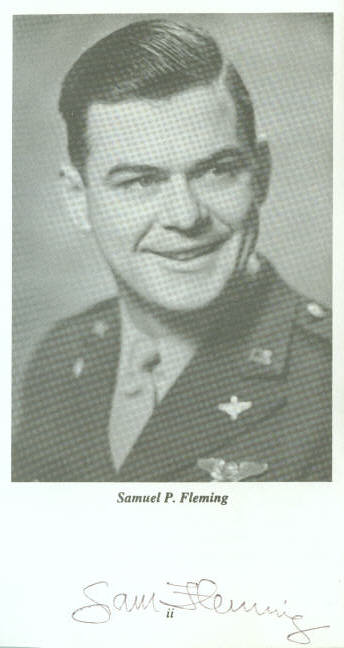
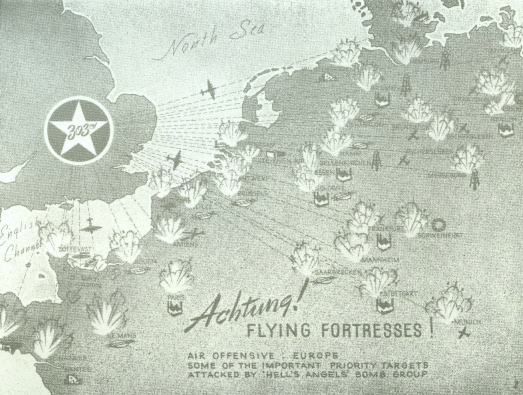
"Flying With the Hell's Angels" is the story of Dr. Sam Fleming and his experiences during World War II as a B-17 Flying Fortress Navigator, 303rd Bombardment Group(H) Eighth Air Force (1943-1944). Ed Y. Hall took Fleming's story and turned it into the book.
Many of Sam's friends suggested that he dictate a summary of his experiences during his tour of duty in the Army Air Corps during World War II, but it took him years to make the decision. Much of this book is based on notes from his small diary, his memory, military records, friends and input from crewmates. This book is his memoirs of the long experiences as a young navigator on one of the greatest war planes to ever fly against an enemy - the B-17 Flying Fortress.
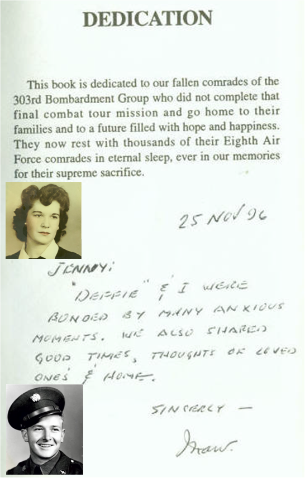
Dr. Sam Fleming evidently knew my grandfather, John Paul Deffinger, and included a note in his book that he gave to my grandmother, Genevieve Deffinger (Jenny). I've been told that my grandfather's nickname was "Deffie". ---Michelle Deffinger
Dr. Sam Fleming's quest began when he left Lanford Station to attend Furman University. After graduating from Furman, it was clear to Fleming that military service was inevitable. He had heard that the Army Air Corps had a special program providing medical training, the 22-year-old aspiring physician paid a visit to a Spartanburg recruiter. "That recruiting sergeant must have needed a few more bodies to make his quota," Fleming muses, "because he signed me up, assuring me that even though he'd never heard of the medical training program, that he was sure someone at my first duty assignment would be able to tell me all about it."
On Aug. 1, 1942, Fleming reported to active duty at Fort Jackson. When he left the military on Oct. 7, 1945, he was still looking for someone who knew something about that elusive medical program.
Fleming had kept a diary during his months in Fortress Europe, despite warnings that doing so was inadvisable, and his family and friends had often urged him to "decipher" the personal account so others could read it. Hall, a member of Wofford College's administrative staff, had already published an account of his own tour of duty as a military adviser in Vietnam, titled "Valley of the Shadow," and was immediately fascinated with Fleming's story.
"I was struck with the uniqueness of Sam's experience," he says of their first conversation. "He was flying at one of the most dangerous times of the air war. It was like Russian roulette every time he went up. He was spinning that cylinder with each mission." Although the memoir provides background, the narrative focuses on the three-month period from Jan. 29, 1944, to April 27, 1944, the 87 days in which his 10-man bomber crew completed 30 missions over the European theater of war. As part of the 303rd Bomb Group, dubbed "The Hells' Angels," the crew was based in Molesworth, England.
This 87-day period included the eight days known as Big Week, a round-the-clock air offensive against the German aviation industry. The aim was to knock the Luftwaffe (German Air Force) out of the air, giving Allied bombers free reign to destroy military targets.
On one mission alone, 69 Allied bombers were shot down, each with a 10-man crew aboard. Three times Fleming returned to his barracks to find that his crew members were the only ones to make it back.
Even now, almost 50 years after the fact, he remembers the feeling of living from mission-to-mission.
"You got to where you didn't want to get to know anybody too well," he recalls. "If you made friends, it made it even harder to handle the losses."
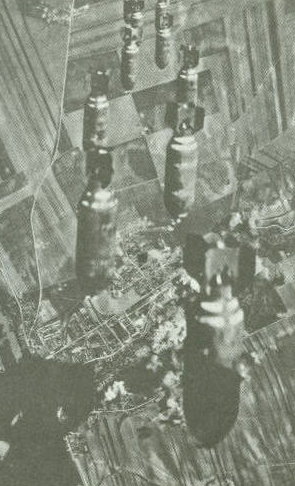
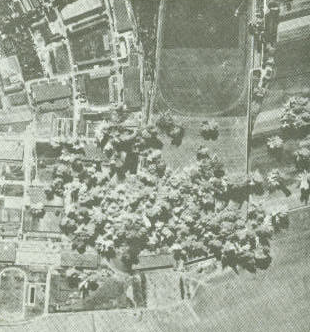
Precision Bombing At It's Best
But the common bond that danger and uncertainty forged proved to be a strong one for the young aviator and his fellow crew members. He says of the six surviving members of his original crew, "We're closer together than people I've known my whole life, and we didn't know each other but about nine months."
On his 26th mission, Fleming was hit in the right leg by a piece of flak. He received his Purple Heart in the mail in 1984. "It must have taken them that long to decide if I should have a Purple Heart or not," Fleming laughs. "Then again, it could have been mailed in 1944."
On fire, a brave B-17 Flying Fortress crew hold their position and bore into the target at all costs (Berlin, 6 March 1944)
When the young Lt. Fleming - in his mid-20s the "old man" of his group - arrived in England, an instructor told him that he'd never live through his 30 missions. The odds were that was an accurate prediction.
Reflecting on all the near-misses he experienced, he attributes his survival in part to luck, "being in the right place at the right time." But he also credits his survival to his dreams. "I had hopes and plans," he says. "I think that's what kept me stable in a situation that many others did not survive."
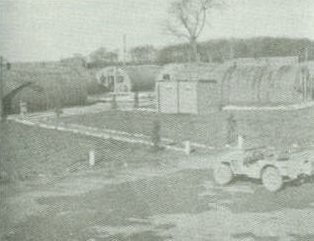
"Pneumonia Hill", Molesworth, England (home away from home)
Labels:
303rd Bombardment Group,
B-17,
Eighth Air Force,
Hell's Angels,
Molesworth,
WWII
Wednesday, May 26, 2010
Doing the Impossible
From the book "Flyboys" by James Bradley
If there's any of you who don't want to go, just tell me. Because the chances of you making it back are pretty slim. ------Jimmy Doolittle quoted in the Los Angeles Times.
On December 21, 1941, just two weeks after Pearl Harbor, President Roosevelt met with his masters of the land, air and sea. There were challenges everywhere for an America that had been caught off guard with the sixteenth largest military in the world.
The U.S., like Japan, had two basic types of aircraft in its arsenal: land-based and carrier planes. Carrier planes were small and light; they could take off and land on short aircraft carrier runways and their size made them useful as fighter planes and small bombers, but they couldn't match the bomb loads of their larger cousins. The bigger and heavier land-based planes were able to travel farther, but required longer airstrips to get lift; if a land bomber attempted to land on an aircraft carrier, it would crash through the wooden landing deck.
Several of the missions sixteen B-25B bombers are visible. That in the foreground is tail #40-2261, which was mission plane #7, piloted by 2nd Lieutenant Ted W. Lawson. The next plane is tail #40-2242, mission plane #8, piloted by Captain Edwards J. York. Both aircraft attacked targets in the Tokyo area.
USAAF aircrewmen preparing .50 caliber machine gun ammunition on the flight deck of USS Hornet while the carrier was steaming toward the mission's launching point. Three of their B-25B bombers are visible. That in the upper left is tail #40-2298, mission plane #6, piloted by Lieutnenant Dean E. Hallmark. That in top center is tail #40-2283. It was mission plane #5, piloted by Captain david M. Jones. Lt. Hallmark, captured by the Japanese in China, was executed by them at Shanghai on 15 October 1.
Japan's Pearl Harbor strike force had gotten away unscathed because of surprise. With Japan now on the alert, Yankee aircraft carriers would be detected and destroyed if they dared approach the Land of the Rising Sun. And while U.S. land-based planes could reach Japan from airfields in Far Eastern Russia, Joseph Stalin had kept the USSR neutral in the fight with Japan and refused his Amerian ally permission to originate from Russan territory. The coastal areas of China were all in Japanese hands.
But what if....what if long-range army bombers could take off from an aircraft carrier. All military experts (Japanese and American) had simply assumed they could not.
The Billys (the twin-engine B-25 Mitchell army land-based bomber) were too big (50 feet long, with a 67-foot wingspan) and heavy (14 tons) to launch from an aircraft carrier. But if they could.......long-range punch combining land-based bombers with an aircraft carrier would catch the Japanese with their guard down.
Such a complicated and dangerous mission called for a combat leader who was an inspiring commander, a methodical thinker who could anticipate and solve myriad problems, a scientific mind who could weight the odds, and a strong personality who could bull his way through the layers of somnalent bureaucracy. Only one person came to mind. He was none other than the Babe Ruth of Flyboys, the irrepressible Jimmy Doolittle.
At the age of 45, American's preeminent Flyboy was as old as flying itself. Jimmy had "won nearly every aviation trophy there was." A fearless daredevil, a crowd-pleasing barnstormer, Jimmy had been generating headlines and thrilling world audiences with his acronautical aerobatics for twenty years. Jimmy regularly set and then broke international racing records. He had been the first to fly coast to coast in less than 24 hours and then first to do it in less than 12. Jimmy was a short, muscular fireplug of a man with a confident grin above his cleft chin. His nose was a little crooked from having been broken on his road to becoming a boxing champion. He was just 5 feet 4 inches tall and never weighed more thatn 145 pounds, but he was a giant who reached the clouds.

Once Jimmy was at a party in Argentina, where he was in an air show. After a few too many tequilas, he was demonstrating handstands on a high balcony when the balcony gave way and Jimmy broke both his ankles. He still flew the next day. His doctors protested, but Jimmy strapped his aching cast-encased feet onto the rudders. Even in casts the work his feet had to do in piloting made him almost black out a number of times from the pain. But Jimmy looked at the bright side: since his feet were strapped in and he couldn't get out in case of a crash, he could leave his bulky parachute behind.
Jimmy was a military and commercial test pilot before wind tunnels enabled aeronautical engineers to predict how much an airplane could withstand before disintegrating. That meant he found out personally by pushing himself and his flying machines to the limits of new destruction. He crashed on numerous occasions and parachuted three times to save himself. But it was not all spectacular feats of risk taking. Jimmy was the first to be awarded a Ph.D. in aeronautical science from the Massechusetts Institute of Technology and was the brains behind the development of hte high-octane gasoline that powers all planes today.
Once Jimmy was on board FDR's secret plan, a group of army Flyboys training in Oregon was given the opportunity to volunteer for a "dangerous mission that would require you to be outside of the United States for a few months." All 140 signed up and transferred to Eglin Air Force Base in Florida for training in February of 1942.
Taking off on extremely short runways at bare minimum airspeed was he exact opposite of how they had previously flown. Abruptly pulling up a heavy bomber with the tail almost dragging on the ground was unnatural to them, and a harrowing experience. It could be done as long as an engine didn't skip a beat.
On March 3, 1942, the Flyboys finally met their commander. Until then they had never heard his name and his identity was kept a secret.
In the large meeting room the air was abuzz when the great little man himself walked in and announced, "Doolittle is my name." They knew exactly who he was as he was already a legend. They knew they were in for something big and that this mission was very important if he was involved in it.
Then, and several times over the next 45 days, Jimmy reminded his young volunteers that this vital mission would be dangerous. "If anyone wants to drop out, he can. No questions asked." Not one Flyboy ever accepted his kind offer.
It wasn't until the USS Hornet and Doolittle's Raiders were safely out into the Pacific that it was announced, "The target of this task force is Tokyo. The army is going to bomb Japan, and we're going to get them as close to the enemy as we can. This is a chance for all of us to give the Japs a dose of their own medicine." Cheers filled the air and sailors jumped up and down like small children.
Lileutenant Colonel James. H. Doolittle (left front), leader of the attacking force, and Captain Marc A. Mitscher, Commanding Officer of USS Hornet pose with a 500-pound bomb and USAAF aircrew members.
The key to the mission was the innovative idea of combining an aircraft carrier with the Billys. Japan assumed itself safe from air threats because land-based U.S. Army aircraft couldn't reach the homeland from Hawaii or Midway. And if the U.S. Navy was foolish enough to move an aircraft carrier within effective striking range of Japan, the American force would be obliterated. No one in Japan imagined that heavy land bombers could lift off from carrier decks - even some on the USS Hornet had their doubts.
The plan was simple. The Hornet would sail within four to five hundred miles of Japan and the 16 Billys would launch in the afternoon. The Hornet would then skedaddle back toward Pearl Harbor as the raiders dropped their bombs over the cities of Japan at sunset. Then they would fly on to China (the bombers were too heavy to land on the Hornet), where homing beacons would guide them safely to an airfield in Chuchow, beyond Japanese control.
As the Hornet headed for history, a typhoon-force wind buffeted the ships. Howling winds and sheeting sea spray had deckhands crawling across the deck on all fours to keep from being washed overboard.
Early on the morning of April 18, 1942 two Japanese ships observed the American fleet and radioed a warning to Tokyo. Unknown to the Americans, the Japanese had stationed a string of 50 civilian-manned, radio-equipped "picket boats" 650 miles out in the Pacific.
USS Nashville firing her 6"/47 main battery guns at a Japanese picket boat encountered by the raid task force.
U.S. destroyers were ordered to sink them. A sailor recalled watching and thinking, "That I will never forget or feel good about this until the day I die. They are shooting at women and children screaming and running around. Inside your mind you think what the hell happened to the Ten Commandements? We're not supposed to do this to one another."
"They know we're here," the Hornet's captain told Jimmy. It was time to roll. Takeoff now, 8 sailing hours and 200 miles short of the intended launch point, suddenly transformed a dangerous mission into a suicidal one. With the element of surprise lost, it was a good bet Jimmy and his boys would be shredded by opposing fighter planes. Even if they survived Tokyo's antiaircraft guns, the extra fuel expended to get that far ruled out reaching the do-or-die Chinese airfields. One pilot remembers, "Cold chills were running up and down my spine....I don't think there was a man leaving who really believed he would complete the flight safely."
The plane at right has tail #40-2282. It is mission plane #4, piloted by 2nd Lieutenant Everett W. Holstrom, Jr. during the raid, in which it attacked targets in Tokyo. Note protective cover over its gun turret, and wooden dummy guns mounted in its tail cone. The plane at left is warming up its engines, as was done periodically during voyage.
That's when Doolittle called all hands on deck and said, "If there's any of you who don't want to go, just tell me. Because the chances of you making it back are pretty slim." And nobody batted an eye.
They were going to strike right in the middle of the day and the Japanese had been tipped off. Everyone assumed they would not survive this mission. First, they expected to encounter a swarm of fighters coming after them and Second, if they got to the targets and got out, they could not make it past midpoint in the China Sea and they would have to ditch the planes in a Japanese-controlled area. Nevermind being captured as a prisoner of war. To add to all that the men would face a 24-knot headwind all the way to Honshu.
Navy crew and army pilots slipped, slid, and crawled across the heaving drenched deck to the planes. The Hornet was being tossed about in 30-foot swells, rocking and rolling up and down and from side to side. Gale-force winds made it difficult to stand on deck. It was zero weather conditions.....ZERO! That means they couldn't see acrss the table. The 30-foot sea was 70-feet from the water to the top of the ship and the bow of the ship was going down and picking up water and throwing it over the deck.
USS Hornet as seen from the USS Enterprise.
The Flyboys were forced to take off by speeding down the deck directly into the trough of a huge wave. The Hornet was bobbing up and down like a cork. The trick was to time the launch so that the Billys reached the end of the deck as teh carrier peaked in its upward movement. Each pilot would get the go signal as the front of the ship tilted into the churning foam. Then he would speed down the deck, seemingly headed into the bowels of a howling sea.
As Jimmy prepared to launch he was captured on film. "I knew hundreds of eyes were on me," Jimmy remembered, "especially those of the B-25 crews who were to follow. If I didn't get off successfully, I'm sure many thought they wouldn't be able to make it either."
Could the heavy planes with a bomb load of two thousand pounds get to Japan and then make it to the nearest safe landing point in China? Even before that, could such heavy planes designed for long landing strips get off a short carrier deck?
At that moment Jimmy was a lone Flyboy whose mission was to do the impossible. Jimmy's roaring engines pulled at his brakes "like circus elephants against their chains." The signalman watching the pitch of the carrier signaled "NOW!" The king of the air began his roll. "A navy pilot shouted to anyone within earshot: "He won't make it! He can't make it!" But as Jimmy's navigator later recalled, "We were particularly confident since we had the best pilot in the Air Force flying with us."
Doolittle's plane taking off from the USS Hornet at the start of the raid, 18 April 1942.
Unique view of Doolittle's plane taking off from the USS Hornet.
They watched him like hawks and the boys on deck saw America's premier Flyboy take off with yards to spare. The entire convoy shouted in a surge of relief, a cheer so loud and throaty and ecstatic that the crewmen could even hear it above the roar of their props.
Following Jimmy's lead, the other Flyboys wrestled their fifteen Billys up. Now that they had mastered their dangerous takeoff, they flew for hours just above the angry waves as they contemplated the wiles of the wind. The wind slowed the 'Raiders' down, consumed their fuel, and messed with their follow-the-leader flight plan.
As they feared, their gas gauges confirmed they were on a suicide mission. Being over 600 miles away from Japan when they launched, it was pretty obvious that it wasn't going to fit. The willingness of American boys to risk their lives for their country was not what the Boy Soldier in Tokyo had expected. Rather than stay home in their shells like cowed "merchants," these Americans had as much "fighting spirit" as the Japanese. But they didn't call it that. The Flyboys called it "balls".
If there's any of you who don't want to go, just tell me. Because the chances of you making it back are pretty slim. ------Jimmy Doolittle quoted in the Los Angeles Times.
On December 21, 1941, just two weeks after Pearl Harbor, President Roosevelt met with his masters of the land, air and sea. There were challenges everywhere for an America that had been caught off guard with the sixteenth largest military in the world.
The U.S., like Japan, had two basic types of aircraft in its arsenal: land-based and carrier planes. Carrier planes were small and light; they could take off and land on short aircraft carrier runways and their size made them useful as fighter planes and small bombers, but they couldn't match the bomb loads of their larger cousins. The bigger and heavier land-based planes were able to travel farther, but required longer airstrips to get lift; if a land bomber attempted to land on an aircraft carrier, it would crash through the wooden landing deck.
Japan's Pearl Harbor strike force had gotten away unscathed because of surprise. With Japan now on the alert, Yankee aircraft carriers would be detected and destroyed if they dared approach the Land of the Rising Sun. And while U.S. land-based planes could reach Japan from airfields in Far Eastern Russia, Joseph Stalin had kept the USSR neutral in the fight with Japan and refused his Amerian ally permission to originate from Russan territory. The coastal areas of China were all in Japanese hands.
But what if....what if long-range army bombers could take off from an aircraft carrier. All military experts (Japanese and American) had simply assumed they could not.
The Billys (the twin-engine B-25 Mitchell army land-based bomber) were too big (50 feet long, with a 67-foot wingspan) and heavy (14 tons) to launch from an aircraft carrier. But if they could.......long-range punch combining land-based bombers with an aircraft carrier would catch the Japanese with their guard down.
Once Jimmy was at a party in Argentina, where he was in an air show. After a few too many tequilas, he was demonstrating handstands on a high balcony when the balcony gave way and Jimmy broke both his ankles. He still flew the next day. His doctors protested, but Jimmy strapped his aching cast-encased feet onto the rudders. Even in casts the work his feet had to do in piloting made him almost black out a number of times from the pain. But Jimmy looked at the bright side: since his feet were strapped in and he couldn't get out in case of a crash, he could leave his bulky parachute behind.
Jimmy was a military and commercial test pilot before wind tunnels enabled aeronautical engineers to predict how much an airplane could withstand before disintegrating. That meant he found out personally by pushing himself and his flying machines to the limits of new destruction. He crashed on numerous occasions and parachuted three times to save himself. But it was not all spectacular feats of risk taking. Jimmy was the first to be awarded a Ph.D. in aeronautical science from the Massechusetts Institute of Technology and was the brains behind the development of hte high-octane gasoline that powers all planes today.
Once Jimmy was on board FDR's secret plan, a group of army Flyboys training in Oregon was given the opportunity to volunteer for a "dangerous mission that would require you to be outside of the United States for a few months." All 140 signed up and transferred to Eglin Air Force Base in Florida for training in February of 1942.
Taking off on extremely short runways at bare minimum airspeed was he exact opposite of how they had previously flown. Abruptly pulling up a heavy bomber with the tail almost dragging on the ground was unnatural to them, and a harrowing experience. It could be done as long as an engine didn't skip a beat.
On March 3, 1942, the Flyboys finally met their commander. Until then they had never heard his name and his identity was kept a secret.
Then, and several times over the next 45 days, Jimmy reminded his young volunteers that this vital mission would be dangerous. "If anyone wants to drop out, he can. No questions asked." Not one Flyboy ever accepted his kind offer.
It wasn't until the USS Hornet and Doolittle's Raiders were safely out into the Pacific that it was announced, "The target of this task force is Tokyo. The army is going to bomb Japan, and we're going to get them as close to the enemy as we can. This is a chance for all of us to give the Japs a dose of their own medicine." Cheers filled the air and sailors jumped up and down like small children.
The key to the mission was the innovative idea of combining an aircraft carrier with the Billys. Japan assumed itself safe from air threats because land-based U.S. Army aircraft couldn't reach the homeland from Hawaii or Midway. And if the U.S. Navy was foolish enough to move an aircraft carrier within effective striking range of Japan, the American force would be obliterated. No one in Japan imagined that heavy land bombers could lift off from carrier decks - even some on the USS Hornet had their doubts.
The plan was simple. The Hornet would sail within four to five hundred miles of Japan and the 16 Billys would launch in the afternoon. The Hornet would then skedaddle back toward Pearl Harbor as the raiders dropped their bombs over the cities of Japan at sunset. Then they would fly on to China (the bombers were too heavy to land on the Hornet), where homing beacons would guide them safely to an airfield in Chuchow, beyond Japanese control.
Early on the morning of April 18, 1942 two Japanese ships observed the American fleet and radioed a warning to Tokyo. Unknown to the Americans, the Japanese had stationed a string of 50 civilian-manned, radio-equipped "picket boats" 650 miles out in the Pacific.
U.S. destroyers were ordered to sink them. A sailor recalled watching and thinking, "That I will never forget or feel good about this until the day I die. They are shooting at women and children screaming and running around. Inside your mind you think what the hell happened to the Ten Commandements? We're not supposed to do this to one another."
"They know we're here," the Hornet's captain told Jimmy. It was time to roll. Takeoff now, 8 sailing hours and 200 miles short of the intended launch point, suddenly transformed a dangerous mission into a suicidal one. With the element of surprise lost, it was a good bet Jimmy and his boys would be shredded by opposing fighter planes. Even if they survived Tokyo's antiaircraft guns, the extra fuel expended to get that far ruled out reaching the do-or-die Chinese airfields. One pilot remembers, "Cold chills were running up and down my spine....I don't think there was a man leaving who really believed he would complete the flight safely."
That's when Doolittle called all hands on deck and said, "If there's any of you who don't want to go, just tell me. Because the chances of you making it back are pretty slim." And nobody batted an eye.
They were going to strike right in the middle of the day and the Japanese had been tipped off. Everyone assumed they would not survive this mission. First, they expected to encounter a swarm of fighters coming after them and Second, if they got to the targets and got out, they could not make it past midpoint in the China Sea and they would have to ditch the planes in a Japanese-controlled area. Nevermind being captured as a prisoner of war. To add to all that the men would face a 24-knot headwind all the way to Honshu.
Navy crew and army pilots slipped, slid, and crawled across the heaving drenched deck to the planes. The Hornet was being tossed about in 30-foot swells, rocking and rolling up and down and from side to side. Gale-force winds made it difficult to stand on deck. It was zero weather conditions.....ZERO! That means they couldn't see acrss the table. The 30-foot sea was 70-feet from the water to the top of the ship and the bow of the ship was going down and picking up water and throwing it over the deck.
The Flyboys were forced to take off by speeding down the deck directly into the trough of a huge wave. The Hornet was bobbing up and down like a cork. The trick was to time the launch so that the Billys reached the end of the deck as teh carrier peaked in its upward movement. Each pilot would get the go signal as the front of the ship tilted into the churning foam. Then he would speed down the deck, seemingly headed into the bowels of a howling sea.
As Jimmy prepared to launch he was captured on film. "I knew hundreds of eyes were on me," Jimmy remembered, "especially those of the B-25 crews who were to follow. If I didn't get off successfully, I'm sure many thought they wouldn't be able to make it either."
Could the heavy planes with a bomb load of two thousand pounds get to Japan and then make it to the nearest safe landing point in China? Even before that, could such heavy planes designed for long landing strips get off a short carrier deck?
At that moment Jimmy was a lone Flyboy whose mission was to do the impossible. Jimmy's roaring engines pulled at his brakes "like circus elephants against their chains." The signalman watching the pitch of the carrier signaled "NOW!" The king of the air began his roll. "A navy pilot shouted to anyone within earshot: "He won't make it! He can't make it!" But as Jimmy's navigator later recalled, "We were particularly confident since we had the best pilot in the Air Force flying with us."
They watched him like hawks and the boys on deck saw America's premier Flyboy take off with yards to spare. The entire convoy shouted in a surge of relief, a cheer so loud and throaty and ecstatic that the crewmen could even hear it above the roar of their props.
Following Jimmy's lead, the other Flyboys wrestled their fifteen Billys up. Now that they had mastered their dangerous takeoff, they flew for hours just above the angry waves as they contemplated the wiles of the wind. The wind slowed the 'Raiders' down, consumed their fuel, and messed with their follow-the-leader flight plan.
As they feared, their gas gauges confirmed they were on a suicide mission. Being over 600 miles away from Japan when they launched, it was pretty obvious that it wasn't going to fit. The willingness of American boys to risk their lives for their country was not what the Boy Soldier in Tokyo had expected. Rather than stay home in their shells like cowed "merchants," these Americans had as much "fighting spirit" as the Japanese. But they didn't call it that. The Flyboys called it "balls".
Labels:
Flyboys,
James Bradley,
Jimmy Doolittle,
Pearl Harbor
Subscribe to:
Posts (Atom)